What Is the Role of Biotechnology in Drug Development 2026?

Time:2026-11-18 Author:Ethan
0%

Biotechnology is changing how medicines are discovered, tested, and produced. It gives researchers tools to study disease at the molecular level, design antibodies, engineer cells, and identify targets that older methods may miss. The question “What is the role of biotechnology in drugs” matters because these tools can shape both the medicine and the way it reaches patients. Some treatments are made from living cells. Others use biological insights to guide the design of small molecules. The distinction is important.

The evidence is visible in today’s development pipeline. IQVIA Institute’s Global Trends in R&D 2024 describes continued growth in medicine research and the expanding role of biologics and newer therapeutic approaches. The FDA’s Center for Drug Evaluation and Research approved 50 novel drugs in 2024, a useful indicator of innovation, though not a measure of biotechnology’s contribution alone. FDA approval lists also show how varied new medicines have become, from biologics to targeted therapies. Progress is real. It is not automatic.

Biotechnology may help researchers select patients more precisely, improve manufacturing consistency, and investigate diseases with few treatment options. Yet complex production, uncertain clinical results, high development costs, and unequal access remain serious constraints. A promising laboratory result can still fail in a clinical trial. That part gets less attention. For 2026, the key question is not whether biotechnology can produce striking science. It is whether evidence, safety monitoring, and practical manufacturing can turn that science into reliable treatments patients can actually receive.
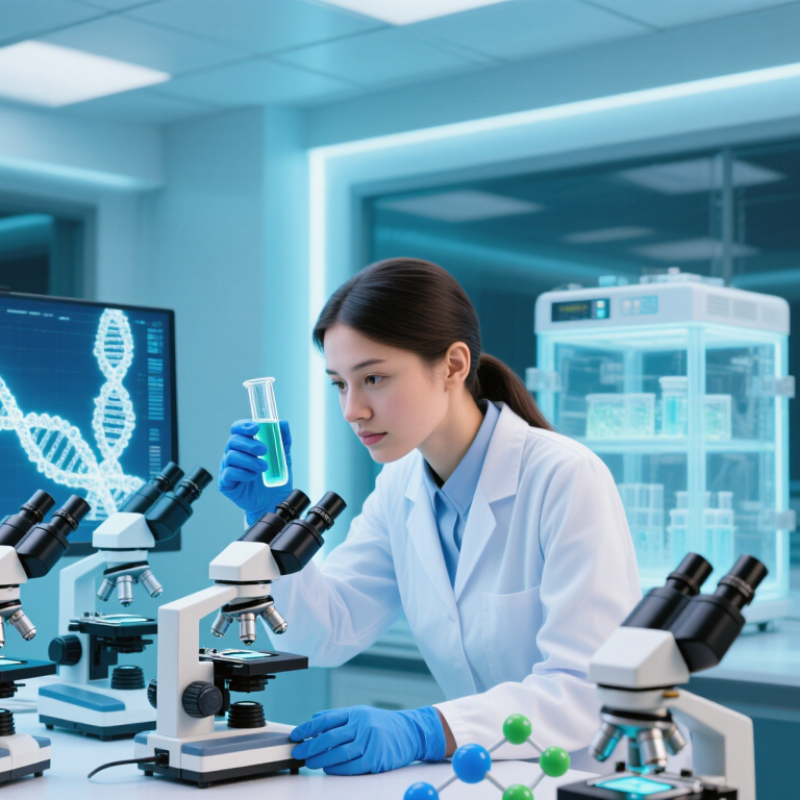
What Is the Role of Biotechnology in Drug Development 2026?

Biotechnology’s Role in Modern Drug Development

Biotechnology’s Role in Modern Drug Development

Biotechnology helps researchers design medicines around specific biological targets. They can study proteins, genes, and immune pathways, then test whether a candidate changes a disease-related process. This approach supports therapies such as engineered antibodies, cell-based treatments, and RNA medicines. It also helps teams investigate why patients may respond differently. The work is precise, but not predictable.

In 2026, computational models can help select candidates and interpret complex biological data. Laboratory experiments still matter. Researchers may compare treated and untreated cells, measure protein activity, and check for toxicity before moving toward clinical studies. Each step needs clear controls and reproducible methods. A promising result in a dish is not proof of benefit in people. Some findings fail to translate, and that gap deserves more attention than it often gets.

Tips: Ask how a medicine was tested, which patients were studied, and what uncertainties remain. Look for evidence from well-designed clinical trials, not just early laboratory results. Keep expectations measured. Biotechnology can open useful paths, but careful testing determines whether those paths lead to safe and effective treatments.

Core Biotechnologies Used to Discover Drug Candidates

Drug candidates often start with a biological clue: a gene linked to disease, a faulty protein, or a cellular pathway that can be altered. Genomics and multiomics help researchers compare diseased and healthy tissue, then identify targets worth testing. CRISPR-based screens can switch genes off in cultured cells. A change in cell growth or protein activity offers a useful clue, not proof.

High-throughput screening tests many compounds against a target, while recombinant proteins and antibody libraries help reveal molecules that bind specific structures. Organoids add another layer: small, lab-grown tissue models can show how candidate molecules affect human-like cells. The BIO, Informa Pharma Intelligence, and QLS Advisors report Clinical Development Success Rates and Contributing Factors 2011–2020 estimated an overall 7.9% likelihood of approval for drug candidates entering clinical development. Many candidates fail. Early biological signals need careful validation.

The FDA’s 2024 CDER report lists 50 novel drug approvals, but approval counts do not show which discovery tools produced each medicine. That distinction matters. A bright signal in a screening plate may disappear in a more realistic tissue model. Researchers therefore combine assays, genetic evidence, and toxicity checks before advancing a candidate. Models still have blind spots; human biology is messier than a dish.

How Biotech Advances Each Stage of Drug Development

What Is the Role of Biotechnology in Drug Development 2026?

Biotechnology helps researchers turn biological insights into potential medicines. In discovery, genomic and protein analyses can reveal disease targets and show how cells respond to them. Scientists then design candidate molecules, such as antibodies or engineered proteins, and test their activity in laboratory models. A promising result is only a starting point. Not every signal holds up.

Before human studies, teams assess a candidate’s behavior, potential risks, and suitable formulation. These tests help guide decisions, but models cannot fully predict how people will respond. In clinical development, carefully designed trials examine safety and whether a treatment may benefit patients. Biomanufacturing also matters: living cells can produce complex medicines, yet small process changes may affect consistency. Documentation and quality checks help teams spot such differences. The work is precise, but not tidy; unexpected results can send researchers back to earlier experiments.

Tips: When reading about a biotech medicine, look for evidence from more than one development stage. Ask how researchers measured benefit, monitored safety, and checked manufacturing consistency. Early promise is not proof. A clear account of limitations builds trust.

Therapeutic Areas Reshaped by Biotech Medicines

Biotechnology is reshaping treatment across cancer, immune disorders, and rare genetic diseases. Antibody medicines can block specific signals, while cell and gene-based approaches may target disease mechanisms more directly. In oncology, treatment decisions increasingly draw on tumor biomarkers, not just the organ where a cancer began. The shift is visible.

The scale is substantial. Global oncology medicine spending reached $223 billion in 2023, and IQVIA Institute projected it would exceed $400 billion by 2028 (Global Oncology Trends 2024). PhRMA’s 2024 Medicines in Development report counted more than 1,300 cancer medicines in clinical development. These figures describe investment and research activity, not guaranteed patient benefit. Some candidates will fail, and access remains uneven.

Biotech medicines also offer options for conditions with few effective treatments, including certain inherited disorders and autoimmune diseases. A patient’s care may involve genetic testing, a specialist consultation, and a carefully monitored infusion. Delivery still matters. Complex manufacturing, cold storage, and limited treatment centers can restrict who receives these therapies. Even promising precision medicine has blind spots: a biomarker may guide treatment, yet not predict an individual response. That gap deserves more attention.

What Is the Role of Biotechnology in Drug Development 2026?

Therapeutic Areas Reshaped by Biotech Medicines

Cancer is one area transformed by biotechnology, including monoclonal antibodies, immune checkpoint inhibitors, and cell therapies. The chart shows estimated new cases worldwide in 2022, illustrating disease burden—not the number of patients treated with biotech medicines. Source: IARC Global Cancer Observatory, GLOBOCAN 2022.

Key Challenges and Emerging Directions in 2026

In 2026, biotechnology is helping drug developers design treatments around biology rather than broad disease categories. Gene and cell therapies, engineered proteins, and precision biomarkers can target specific mechanisms. Yet promising lab results do not guarantee safe, effective medicines. Patient biology varies, and early studies may miss rare side effects or uneven responses. Scale matters. A process that works in a small research batch can behave differently in a larger production vessel.

Key challenges include manufacturing consistency, complex quality testing, and limited data for uncommon diseases. Living cells can change during production, so teams need careful monitoring at each step. Emerging directions include organoid models, better biomarker-guided trials, and computational tools that help prioritize experiments. These approaches may reduce uncertainty, but they are not substitutes for well-designed clinical studies. Data quality remains a weak point; results from different labs can be difficult to compare. That is an uncomfortable limitation.

Tips: When assessing a biotech development claim, look for evidence across multiple stages, not just a compelling mechanism. Check whether studies report sample sizes, safety findings, and manufacturing controls. Ask what remains unknown. A clear answer is often more useful than confident promises.

What Is the Role of Biotechnology in Drug Development 2026? — Key Challenges and Emerging Directions in 2026

Biotechnology Area Role in Drug Development Established Applications Key Challenges Emerging Directions for 2026
Monoclonal antibodies and other biologics Provide highly targeted medicines by binding specific molecular targets, such as cell-surface proteins or circulating signaling molecules. Used in oncology, autoimmune disorders, infectious diseases, and other fields. Some antibodies are engineered as bispecific molecules or linked to drug payloads. Complex manufacturing, high production costs, immunogenicity risks, and the need to demonstrate meaningful benefit over existing treatments. More precise target selection, improved antibody formats, and manufacturing processes designed to improve consistency and efficiency.
Cell and gene therapies Modify cells or genetic material to address disease mechanisms, potentially offering durable effects after a limited number of treatments. Applications include engineered immune-cell treatments and therapies intended to replace, repair, or regulate genetic function. Patient-specific manufacturing for some approaches, variable treatment response, complex logistics, long-term safety monitoring, and difficult scale-up. Greater use of standardized manufacturing, improved cell engineering, and research into treatments that can be produced more consistently.
RNA-based medicines Use RNA to influence protein production or deliver instructions for producing a therapeutic protein. Includes messenger RNA vaccines and medicines that alter or reduce the expression of selected genes. RNA can be unstable and may trigger immune responses; delivery to the correct tissues remains a major technical challenge. Development of improved delivery systems, more tissue-selective approaches, and RNA designs tailored to specific therapeutic uses.
Recombinant proteins and enzyme therapies Supply a functional protein or enzyme that is missing, deficient, or useful for modifying a disease process. Used in areas such as hormone replacement, enzyme deficiencies, and blood-clotting disorders. Protein stability, dosing frequency, immune reactions, and the need to maintain product quality during production and storage. Protein engineering and formulation work aimed at improving activity, stability, and convenience of administration.
Biomarkers and companion diagnostics Help identify disease subtypes, estimate likely treatment response, and support patient selection in clinical studies and care. Biomarkers can be measured in tissue, blood, or other samples and may be used alongside targeted medicines. Assay performance can vary; a biomarker may not reliably predict benefit across all patient groups or clinical settings. Combining molecular, imaging, and clinical data to refine patient stratification and support more informative trial design.
Bioprocessing and analytical biotechnology Enable the production, purification, testing, and quality control of complex biological medicines. Cell culture, fermentation, purification, and analytical methods are central to manufacturing biologics and many advanced therapies. Processes must be reproducible at scale, and changes to manufacturing can require extensive comparability and quality assessments. Process monitoring, automation, and data-supported quality controls can help detect variability earlier and improve manufacturing consistency.
Computational biology and AI-enabled research Analyze biological and clinical data to support target discovery, molecule design, and selection of experiments for testing. Computational tools can help interpret large datasets and prioritize hypotheses, but laboratory and clinical validation remain essential. Data quality, bias, limited biological context, reproducibility, and the risk of treating predictions as proven evidence. Closer integration of computational predictions with experimental biology, transparent validation, and well-documented data workflows.
Clinical development and regulatory science Translate biological findings into evidence on safety, efficacy, manufacturing quality, and appropriate use in patients. Biotechnology medicines are evaluated through preclinical studies, clinical trials, quality controls, and regulatory review. Small or genetically defined patient populations, complex endpoints, long follow-up needs, and specialized manufacturing requirements. More adaptive and biomarker-informed trial designs, alongside early planning for manufacturing, safety monitoring, and evidence requirements.

Note: The 2026 directions shown are areas of active development, not guaranteed outcomes. Actual progress depends on clinical evidence, manufacturing performance, safety, and regulatory review.

FAQS

How do researchers identify possible drug targets?

They compare genes, proteins, and cell activity in healthy and diseased tissue. Switching off a gene in cultured cells can reveal a clue. Not proof.

What does high-throughput screening do?

It tests many compounds against a chosen target, often in small lab plates. A bright signal may fade in a tissue-like model. That happens.

Why do researchers use organoids?

Organoids are small, lab-grown tissue models. They show how candidate molecules affect human-like cells, but they cannot fully represent a person. A useful, imperfect window.

How many drug candidates become approved medicines?

One analysis estimated a 7.9% approval likelihood for candidates entering clinical development between 2011 and 2020. Most candidates fail. Early activity is not a guarantee.

What happens before human studies?

Teams assess a candidate’s behavior, potential risks, and formulation. They also compare results from different tests. Models miss things.

What do clinical trials examine?

Carefully designed trials examine safety and whether a treatment may benefit patients. Researchers monitor responses, which can differ from person to person. That uncertainty matters.

Why does manufacturing consistency matter?

Living cells can produce complex medicines. Small process changes may affect consistency, so teams use documentation and quality checks. Tiny differences can matter.

Which conditions are biotech medicines being developed for?

Research includes cancer, immune disorders, and rare genetic diseases. Biomarkers can help guide treatment, but they cannot predict every person’s response. That gap is hard to interpret.

Conclusion

Biotechnology has transformed drug development by enabling researchers to understand disease biology more precisely and design treatments around specific molecular targets. Tools such as genetic analysis, protein engineering, cell-based models, and advanced screening help identify promising drug candidates and assess how they may work. What is the role of biotechnology in drugs? It supports progress throughout development, from early discovery and laboratory testing to clinical evaluation and the refinement of treatments for different patient groups.

Biotech medicines have reshaped care in areas including cancer, immune disorders, rare diseases, and metabolic conditions. In 2026, progress is expected to be balanced by challenges such as high research costs, complex manufacturing, safety evaluation, and equitable access. Emerging directions—including more personalized approaches, improved biological models, and data-guided research—may help make development more efficient. Overall, biotechnology is expanding the range of possible treatments while increasing the need for careful testing, responsible innovation, and long-term patient monitoring.

Ethan

Ethan

Ethan is a seasoned marketing professional with a deep expertise in our company's innovative product line. With a passion for sharing knowledge and insights, he takes the lead in regularly updating our corporate blog, where he explores industry trends, product features, and effective marketing......