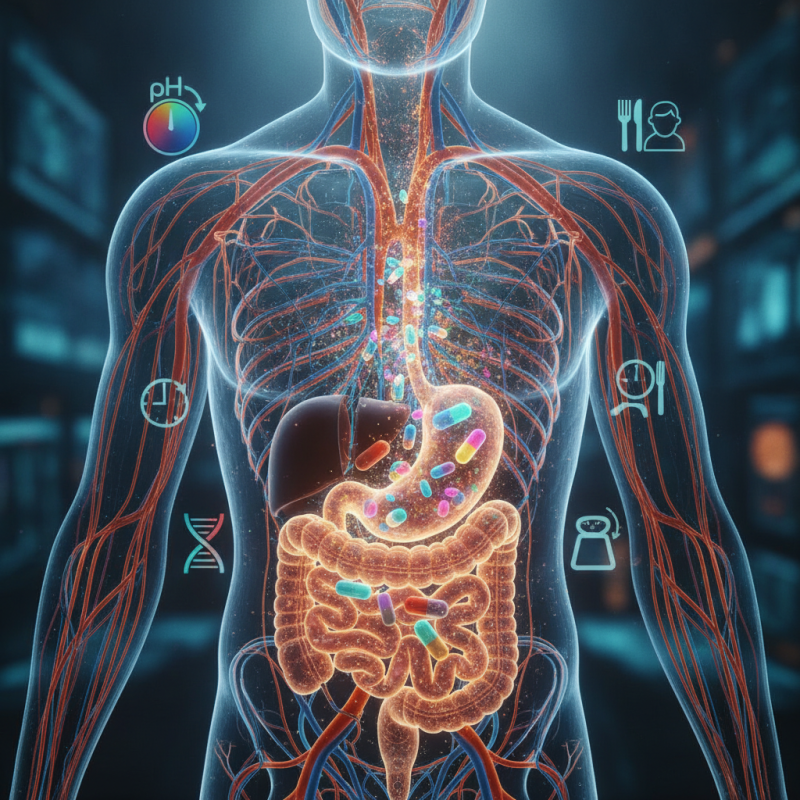
Understanding "what factors affect drug absorption in the body" is crucial for effective medication delivery. Drug absorption is the process by which a drug enters the bloodstream. Many variables can influence this process, including drug formulation, dosage form, and patient characteristics.
Research indicates that over 90% of drugs are absorbed through the gastrointestinal tract. Factors like pH levels, gastrointestinal motility, and food intake can significantly alter absorption rates. For instance, a study by the World Health Organization showed that certain food combinations can enhance or hinder the bioavailability of specific medications.
Moreover, age, weight, and even genetic factors can play a role in how a drug is absorbed. A report from the Clinical Pharmacology Journal highlights that elderly patients often experience altered absorption rates due to changes in gastrointestinal function. This complexity raises questions about standard dosage recommendations. Therefore, understanding these variables is essential to optimizing drug therapies for individual patients.
Factors Affecting Drug Solubility and Dissolution Rates
Drug solubility and dissolution rates are critical for effective drug absorption in the body. These factors determine how quickly and efficiently a medication enters the bloodstream. Various studies indicate that almost 70% of new drug candidates fail due to poor solubility. This high failure rate emphasizes the importance of understanding solubility dynamics.
Lipid solubility significantly affects a drug's absorption. Poorly soluble drugs may require advanced formulations. For instance, the use of nanoparticles can enhance solubility and absorption rates. The pH of the environment can also impact solubility. Drugs taken in acidic conditions may dissolve more readily than in alkaline ones.
Tip: Always consider the pH of your medication's environment.
Dissolution rates vary between solid forms of drugs. Powders tend to dissolve faster than tablets. However, inconsistent dissolution rates can complicate dosing. Additionally, particle size plays a role; smaller particles typically dissolve quicker.
Tip: Discuss medication forms with your healthcare provider.
Understanding these factors is essential for optimizing drug therapies. The pharmacokinetics of a drug heavily relies on its ability to dissolve and become bioavailable. Investing in research and experimentation will lead to better medication outcomes for patients.
Impact of Drug Formulation and Delivery Methods
Drug formulation and delivery methods play a critical role in drug absorption within the body. Factors such as solubility, stability, and release rate significantly influence how effectively a drug can enter the bloodstream. For example, a study published in the Journal of Pharmaceutical Sciences indicates that approximately 70% of drugs face solubility issues, impacting their absorption. Proper formulation can enhance bioavailability, ensuring that patients receive the intended therapeutic effects.
Different delivery methods also affect drug absorption. Oral medications must pass through the digestive system, where factors like gastric pH and enzyme activity can alter their effectiveness. In contrast, transdermal patches allow for bypassing the digestive system, improving absorption rates for certain drugs. Reports show that transdermal systems can yield absorption rates of up to 80%, compared to oral routes that often fall short.
Tips: Always consider the type of drug formulation chosen. It can make a significant difference in treatment outcomes. Additionally, consult healthcare professionals to determine the most effective delivery method for specific medications. Understanding these elements is key to optimizing therapeutic effects and minimizing adverse outcomes.
Physiological and Biochemical Aspects of Drug Absorption
Drug absorption is influenced by various physiological and biochemical factors. The gastrointestinal (GI) tract plays a crucial role in this process. Digestive enzymes and pH levels impact how drugs are broken down and absorbed. For instance, the stomach’s acidic environment can dissolve certain medications, enhancing absorption. A study published in the Journal of Pharmacology indicated that around 70% of orally administered drugs undergo some level of transformation in this phase.
Another critical aspect is the drug's solubility and permeability. Lipophilic drugs tend to pass through biological membranes more easily. A report by the American Journal of Pharmaceutical Sciences noted that approximately 90% of new drug candidates fail due to poor solubility. This highlights the significance of formulating drugs that meet specific criteria for absorption.
Moreover, the presence of food can either hinder or facilitate drug absorption. High-fat meals might enhance the absorption of lipophilic drugs but can negatively affect water-soluble ones. It’s essential to evaluate these interactions carefully. Researchers continue to explore the complexities of these processes. Understanding the pharmacokinetics of absorption is vital for optimizing therapeutic outcomes. Every detail matters in drug development, urging continuous improvement and reassessment of current practices.
Role of Gastrointestinal Tract Conditions on Drug Uptake
The gastrointestinal tract plays a vital role in drug absorption. Conditions such as acid reflux, ulcers, and gastrointestinal infections can significantly impact how effectively medications are absorbed. Changes in pH levels can affect drug solubility.
For example, some drugs are better absorbed in acidic environments, while others thrive in alkaline conditions.
Additionally, gastrointestinal motility affects the timing and efficiency of drug uptake. Slow transit time can delay the absorption of medications, whereas rapid movement may lead to reduced effectiveness.
Complexities arise when patients experience conditions like Irritable Bowel Syndrome (IBS), which can alter these dynamics unpredictably.
Tips for patients: Monitor your body’s response to medications closely. Note any gastrointestinal discomfort after taking your drugs. Discuss these observations with your healthcare provider for tailored advice.
It’s important to maintain a routine, as consistency can increase drug efficacy. A well-balanced diet can also promote better gut health, which is crucial for optimal absorption.
Influence of Blood Flow and Plasma Protein Binding on Absorption
Drug absorption is a complex process influenced by multiple factors. Among these, blood flow and plasma protein binding play significant roles. Blood flow determines how much drug reaches its target site. In areas with higher blood flow, such as the liver and kidneys, drugs often absorb more rapidly. Conversely, low blood flow regions may hinder absorption, delaying the drug's action.
Plasma protein binding is another crucial factor. When drugs bind to plasma proteins, their active form is reduced. This can affect their therapeutic effectiveness. Highly bound drugs may not act as quickly or as effectively as those that remain mostly unbound. The levels of proteins can also vary among individuals. This variability introduces a challenge in predicting a drug's absorption and response in different populations.
Variations in blood flow rates and plasma protein levels underscore the need for careful drug administration. It is essential to consider individual health factors, age, and even hydration levels. These variations create a landscape where absorption is not always predictable. Understanding these elements can enhance the effectiveness of drug therapies in diverse patient groups.
FAQS
: Factors include solubility, stability, and release rate of the drug. These aspects impact how effectively drugs enter the bloodstream.
Oral medications must pass through the digestive system, while transdermal patches can improve absorption rates by bypassing it.
Approximately 70% of drugs encounter solubility issues that hinder their absorption in the body.
The GI tract, along with digestive enzymes and pH levels, plays a critical role in breaking down and absorbing drugs.
Higher blood flow in certain areas allows drugs to reach their target site more quickly, improving absorption rates.
Drugs that bind to plasma proteins have reduced active forms, potentially delaying their therapeutic effects in the body.
Yes, food can either enhance or hinder absorption. High-fat meals may improve lipophilic drug absorption but may affect water-soluble ones negatively.
The formulation can greatly influence treatment outcomes and help ensure the drug's intended therapeutic effects.
Variability in blood flow and plasma protein levels among individuals can create unpredictability in drug absorption and response.
Continuous improvement and reassessment in drug development are vital to optimize therapeutic effects and minimize adverse outcomes.
Conclusion
Drug absorption in the body is influenced by several critical factors. One major aspect is drug solubility and dissolution rates, which determine how effectively a drug can be absorbed into the bloodstream. Additionally, the formulation and delivery methods play a significant role, as they can alter the release of the active ingredient and its bioavailability. Moreover, the physiological and biochemical conditions within the body, including pH levels and enzyme activity, further impact absorption efficacy.
Another essential element is the condition of the gastrointestinal tract, which can affect drug uptake due to factors like motility and the presence of food. Furthermore, blood flow and plasma protein binding influence how quickly and efficiently drugs enter circulation. In summary, understanding what factors affect drug absorption in the body is crucial for optimizing therapeutic effectiveness and improving patient outcomes.

 SJ medical