Understanding "How do biomedical drugs work in the body" is crucial in modern medicine. Biomedical drugs target specific biological pathways. Reports from the National Institutes of Health reveal that targeted therapies can improve treatment efficacy by up to 30%. These drugs interact with internal mechanisms, influencing cellular processes.
Injuries or diseases alter normal body functions. Biomedical drugs can restore balance by modulating these processes. For instance, monoclonal antibodies are engineered to bind specific antigens. This specificity minimizes side effects and enhances therapeutic benefits. Yet, the complexity of biological systems means responses can vary significantly.
Despite advancements, challenges remain. Not all patients respond predictably to biomedical drugs. Genetic factors and comorbidities may influence outcomes. As research progresses, understanding the nuances of drug interactions is essential. Embracing this complexity can lead to breakthroughs in personalized medicine.
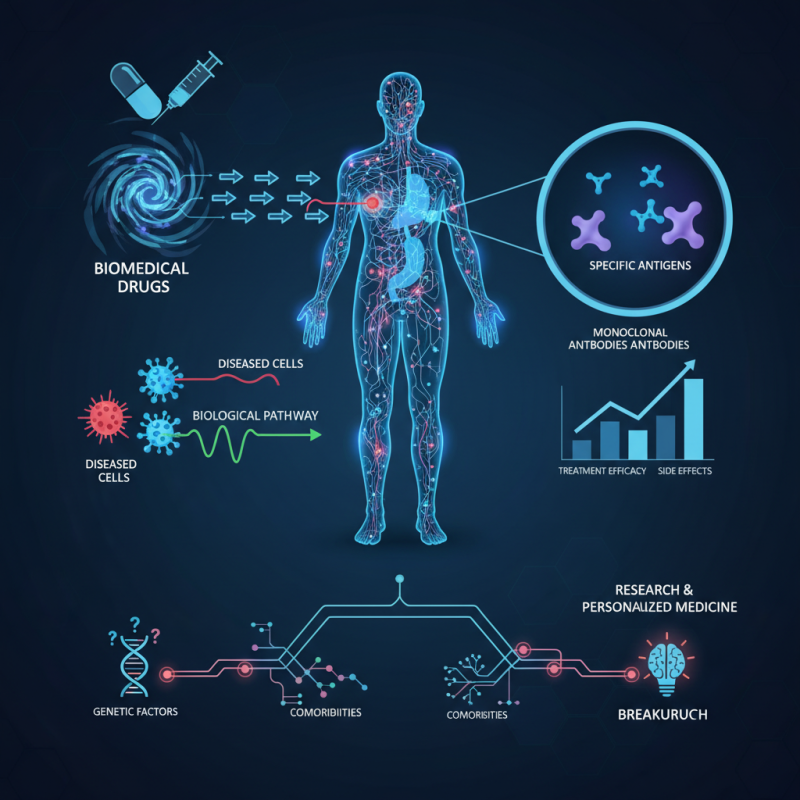
Understanding Biomedical Drugs: An Overview of Their Mechanisms
Biomedical drugs play a crucial role in modern medicine. They target specific pathways in the body to treat various conditions. Understanding how they work helps patients make informed choices. These drugs interact with biological systems in unique ways. For instance, they may bind to receptors on cells, triggering responses that alleviate symptoms.
In many cases, these mechanisms are complex. Not all patients respond the same way. Some might experience side effects while others may find relief. This variability highlights the importance of personalized medicine. Every individual's body is different, and what works for one may not work for another.
Tips: Always discuss your options with a healthcare provider. Monitor your body's reactions to any new medication. Keep an open line of communication about your health.
Additionally, some drugs may have unintended consequences. It's essential to weigh benefits against potential risks. Clinical trials help to understand these dynamics better. Understanding the mechanisms gives insight into potential side effects, increasing safety in usage.
The Role of Targeted Therapy in Biomedical Drug Action
Targeted therapy has transformed the landscape of biomedical drugs. This approach focuses on specific molecules or pathways that contribute to disease progression. According to a 2021 report by the American Society of Clinical Oncology, targeted therapies have improved outcomes for patients with cancers like breast and lung cancer. Around 25% of such patients experience a significant reduction in tumor size.
The power of targeted therapy lies in its precision. It minimizes damage to healthy tissues, compared to traditional treatments. For instance, monoclonal antibodies can identify and bind to cancer cells directly. This targeted mechanism allows for a more efficient attack on tumors. However, access to these therapies can be uneven. Not all patients receive the same benefits. There is a gap based on geographical and socio-economic factors.
Despite the advancements, reliance on targeted therapy raises questions. Are we overlooking broader treatment options? The complexity of human biology means that not every drug will work as intended for every patient. Some studies suggest that nearly 30% of patients do not respond to targeted treatments. The future should focus on personalized medicine, ensuring that therapies align better with individual patient profiles. This may lead to more equitable healthcare solutions.
How Biomedical Drugs Interact with Cellular Pathways
Biomedical drugs have a profound impact on cellular pathways in the body. They interact with specific receptors on cell surfaces, triggering a cascade of events. For instance, when a drug binds to a receptor, it may activate or inhibit signaling pathways. This can lead to various cellular responses such as growth, apoptosis, or inflammation. Understanding these interactions is crucial for developing effective therapies.
Some drugs target enzymes within cells, altering their activity. This action can increase or decrease the production of essential molecules. For example, a drug may enhance the breakdown of a harmful substance. These mechanisms are fascinating yet complex. Every drug has a unique profile and can yield different effects in different individuals. Not all cells will respond the same way, which is where challenges arise.
The balance of benefits and side effects is a critical reflection. A drug that effectively treats one condition may produce unwanted reactions elsewhere. This complexity drives ongoing research. Scientists are continuously striving to improve drug specificity and reduce adverse effects. Even small changes in chemical structure can have significant impacts. Each pathway interaction presents a new avenue for exploration, underscoring the intricate web of biological responses.
How Biomedical Drugs Work in the Body Explained - How Biomedical Drugs Interact with Cellular Pathways
| Drug Class |
Mechanism of Action |
Target Cellular Pathway |
Common Uses |
| Monoclonal Antibodies |
Bind to specific antigens on cells |
Immune Response Modulation |
Cancer, Autoimmune Diseases |
| Small Molecule Inhibitors |
Inhibit specific enzymes or receptors |
Signal Transduction Pathways |
Cancer, Infectious Diseases |
| Gene Therapy |
Alter or replace defective genes |
Gene Regulation Pathways |
Genetic Disorders |
| Antiviral Agents |
Inhibit viral replication |
Cellular Replication Pathways |
HIV, Hepatitis, Influenza |
| Vaccines |
Stimulate adaptive immunity |
Immune Activation Pathways |
Prevent Infectious Diseases |
The Importance of Drug Delivery Systems in Pharmacology
Drug delivery systems play a critical role in pharmacology. They determine how effectively a drug reaches its target in the body. A recent report by the Global Drug Delivery Systems Market indicates that by 2025, this sector is expected to reach $2.7 billion. This growth highlights the increasing need for innovation in how drugs are administered.
In the body, drugs must navigate various barriers to achieve their therapeutic effects. For instance, oral medications often face degradation in the digestive system. According to a study published in the Journal of Controlled Release, less than 30% of some oral drugs reach systemic circulation intact. This challenges patients and healthcare providers alike. It underscores the necessity for more sophisticated delivery methods, like nanoparticles, which can enhance bioavailability.
Despite advances, challenges remain. There are limitations in targeting specific tissues without affecting others. Many traditional delivery systems lack precision. Research from the National Institutes of Health points out that approximately 40% of drug candidates fail due to poor delivery mechanisms. This inefficiency highlights the pressing need for further research and improvement in drug delivery technologies.
Evaluating the Efficacy and Safety of Biomedical Drugs in Patients
Evaluating the efficacy of biomedical drugs requires careful research. Scientists conduct clinical trials to determine how well these drugs work in patients. During trials, various factors are assessed. These include dosage, side effects, and patient demographics. Understanding these aspects helps ensure that drugs are not only effective but also safe for public use.
Safety evaluations are equally crucial. Adverse reactions can vary among individuals. Some may experience severe side effects, while others may not notice any impact. This inconsistency necessitates comprehensive testing. Real-world data collection post-approval helps identify long-term effects. Gathering patient feedback is essential for ongoing assessments.
The relationship between efficacy and safety in biomedical drugs is complex. A drug may perform well in trials but fail in broader populations. Continuous monitoring and refinement are necessary. There are always unknowns in drug interaction and individual responses. By acknowledging these uncertainties, healthcare providers can better navigate treatment decisions for patients.
Conclusion
Biomedical drugs play a crucial role in modern medicine, and understanding how do biomedical drugs work in the body is essential for their effective application. These drugs operate through various mechanisms, including targeted therapies that aim at specific cellular pathways to enhance treatment outcomes. By interacting with these pathways, biomedical drugs can modify disease processes and promote healing.
Moreover, drug delivery systems are vital in ensuring that these medications reach their intended sites in the body efficiently. Evaluating the efficacy and safety of biomedical drugs in patients is equally important, as it informs medical practitioners about potential benefits and risks associated with their use. This comprehensive understanding enables healthcare providers to make informed decisions that optimize patient care and therapeutic outcomes.

 SJ medical