SJ medical
1 / 5

| Model NO. | QS-Paclitaxel |
|---|---|
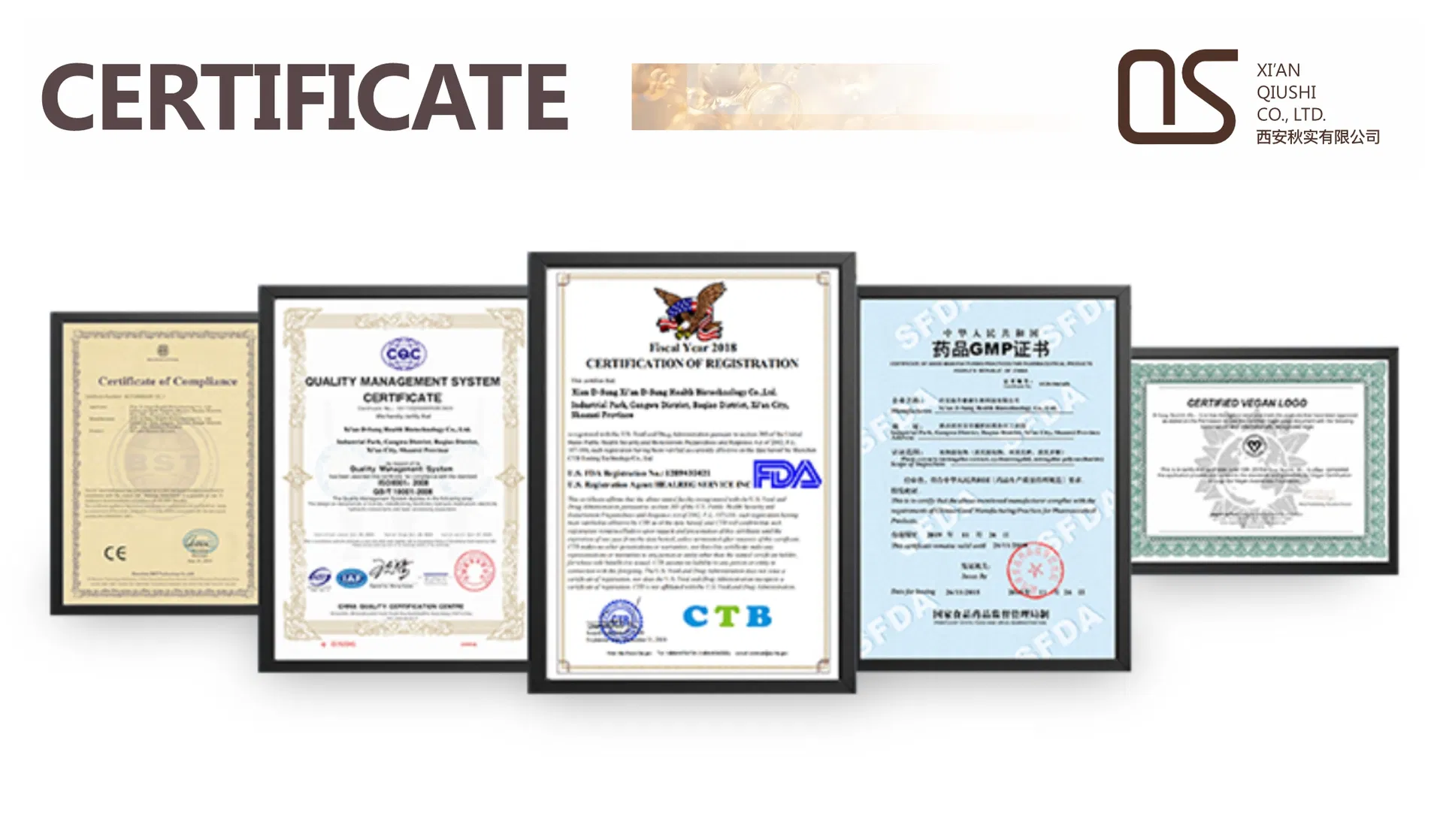
| Certification | GMP, HSE, ISO 9001, USP, BP |
| Suitable for | Elderly, Children, Adult |
| State | Powder |
| Purity | >99% |
| CAS | 33069-62-4 |
| MF | C47H51NO14 |
| MW | 853.918 |
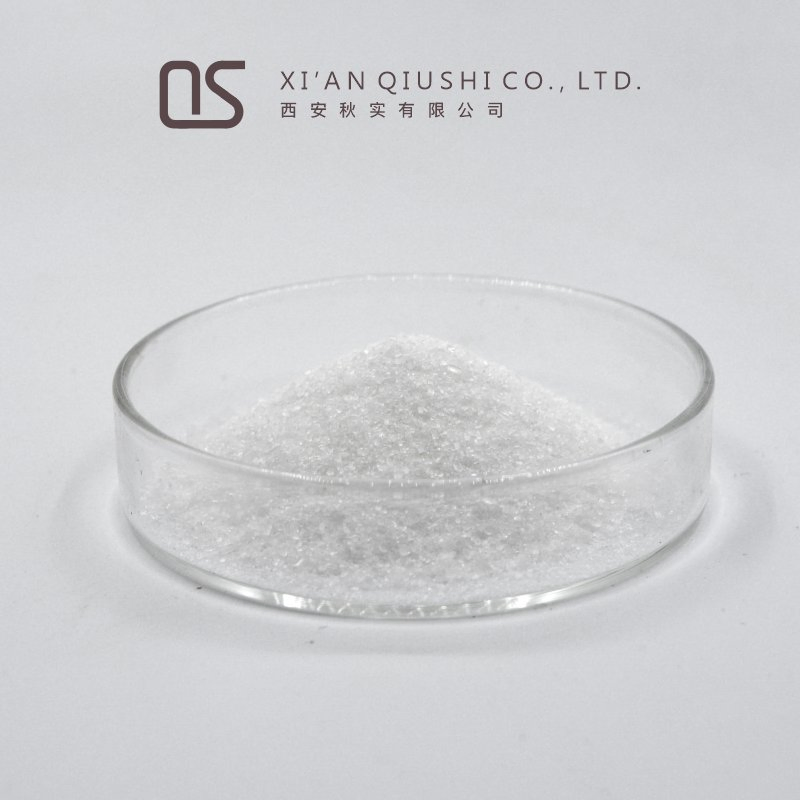
| Appearance | White to off-White Crystalline Powder |
| Test Method | HPLC |
| Melting Point | 213-216℃ |
| Production Capacity | 500kg/Month |

Paclitaxel is a natural diterpenoid compound originally isolated from the bark of the Pacific yew tree and is now produced on a large scale via semi-synthesis or plant cell culture technology. As a classic microtubule-stabilizing anticancer agent, it has a unique mechanism of action: it promotes tubulin polymerization and inhibits depolymerization, leading to excessive stabilization of microtubules in the mitotic spindle during cell division.
This arrests the tumor cell cycle at the G2/M phase and ultimately induces apoptosis. Paclitaxel exhibits broad-spectrum antitumor activity and serves as a cornerstone chemotherapeutic agent for various solid tumors. Its primary indications include ovarian cancer, breast cancer, non-small cell lung cancer, pancreatic cancer, gastric cancer, and head and neck cancers.

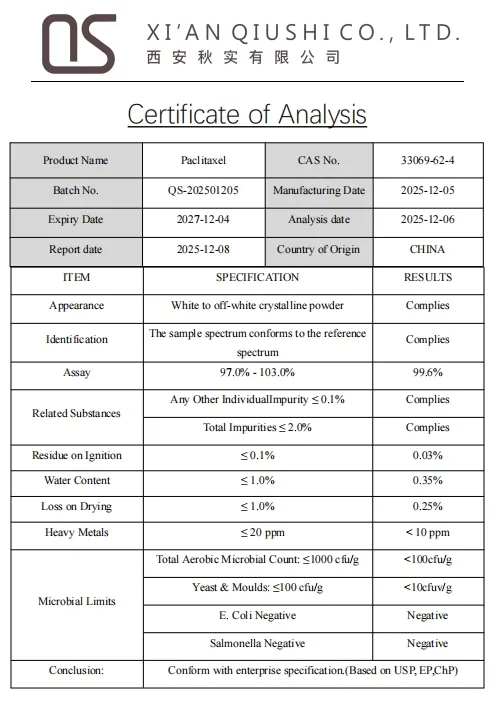
| Product Name | Paclitaxel |
|---|---|
| Appearance | White to off-white crystalline powder |
| CAS No. | 33069-62-4 |
| MF | C47H51NO14 |
| MW | 853.918 |
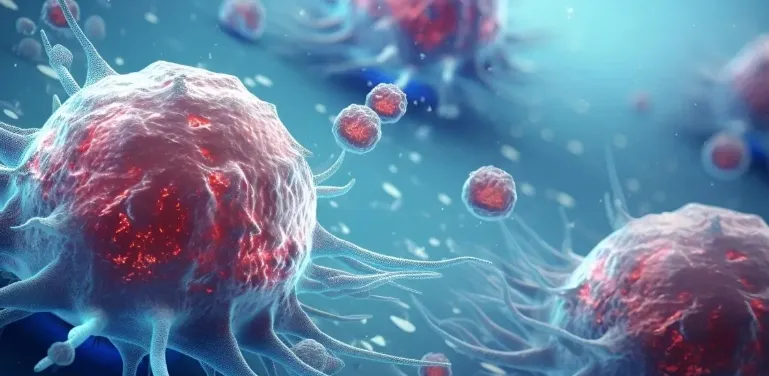
Paclitaxel is a classic microtubule-stabilizing antineoplastic agent that exerts potent anticancer effects through a unique mechanism: it binds specifically and reversibly to the β-subunit of tubulin, promoting abnormal polymerization of tubulin and inhibiting its depolymerization. This leads to hyper-stabilization of microtubule bundles.
The disruption of microtubule dynamics prevents the proper formation and function of the mitotic spindle during cell division, arresting cancer cells in the G2/M phase of the cell cycle and ultimately inducing apoptosis via activation of cell death pathways. Additionally, it can inhibit tumor cell migration and angiogenesis.